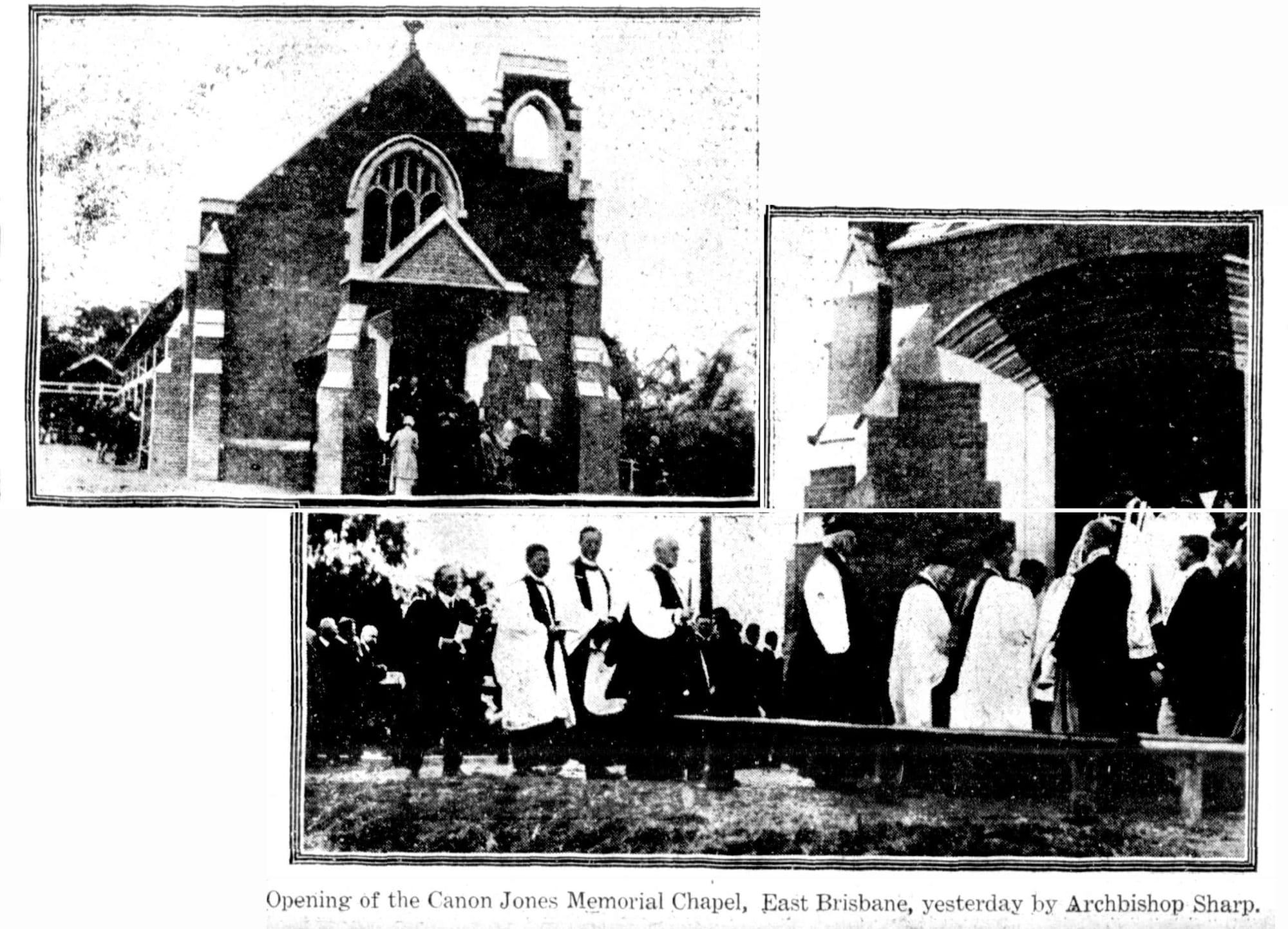
Catalyst for formation
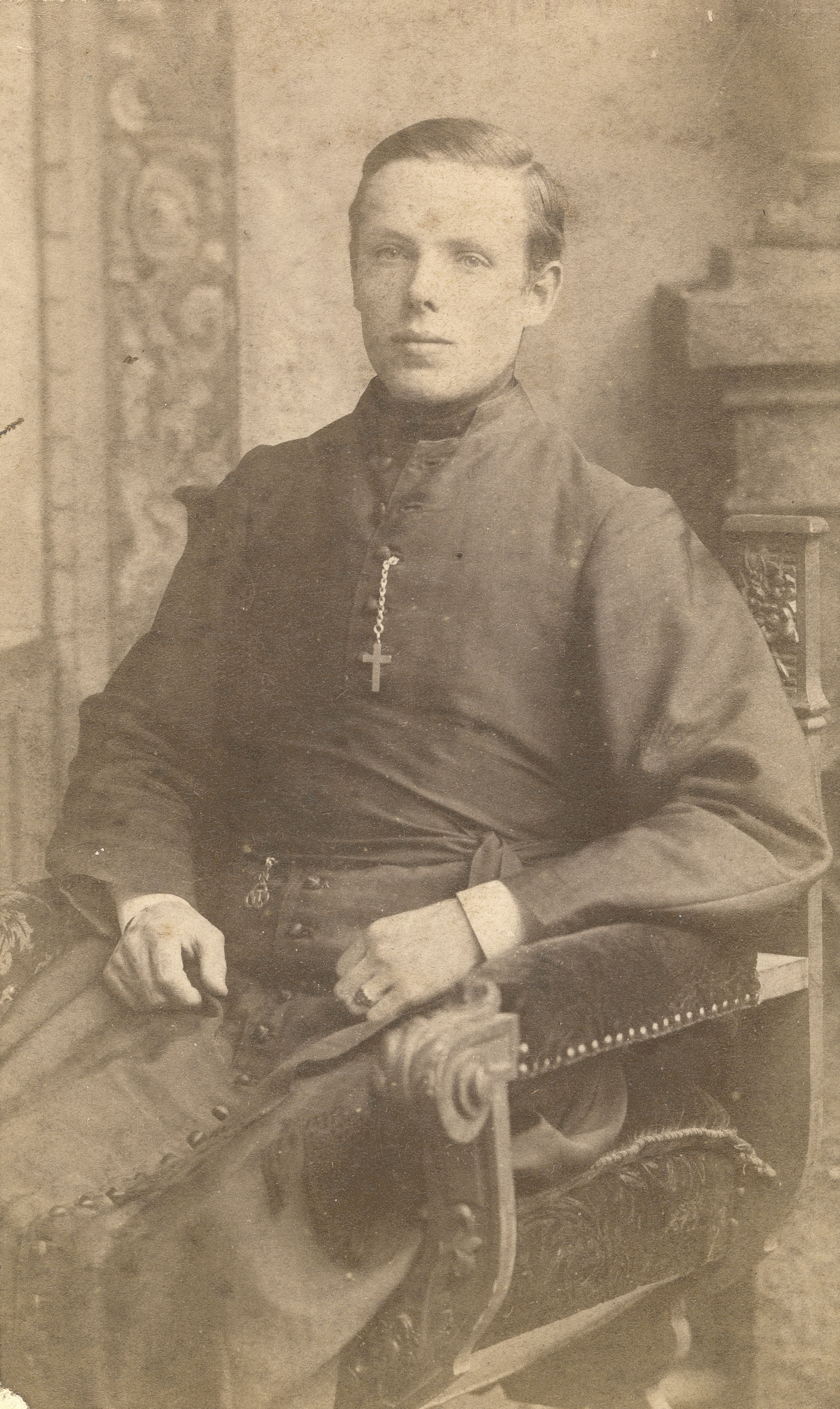
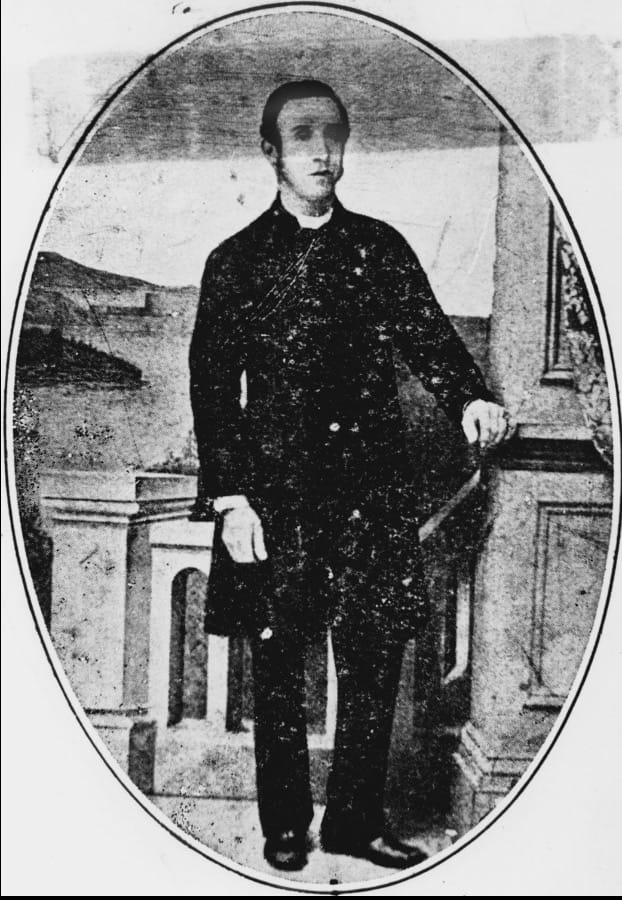
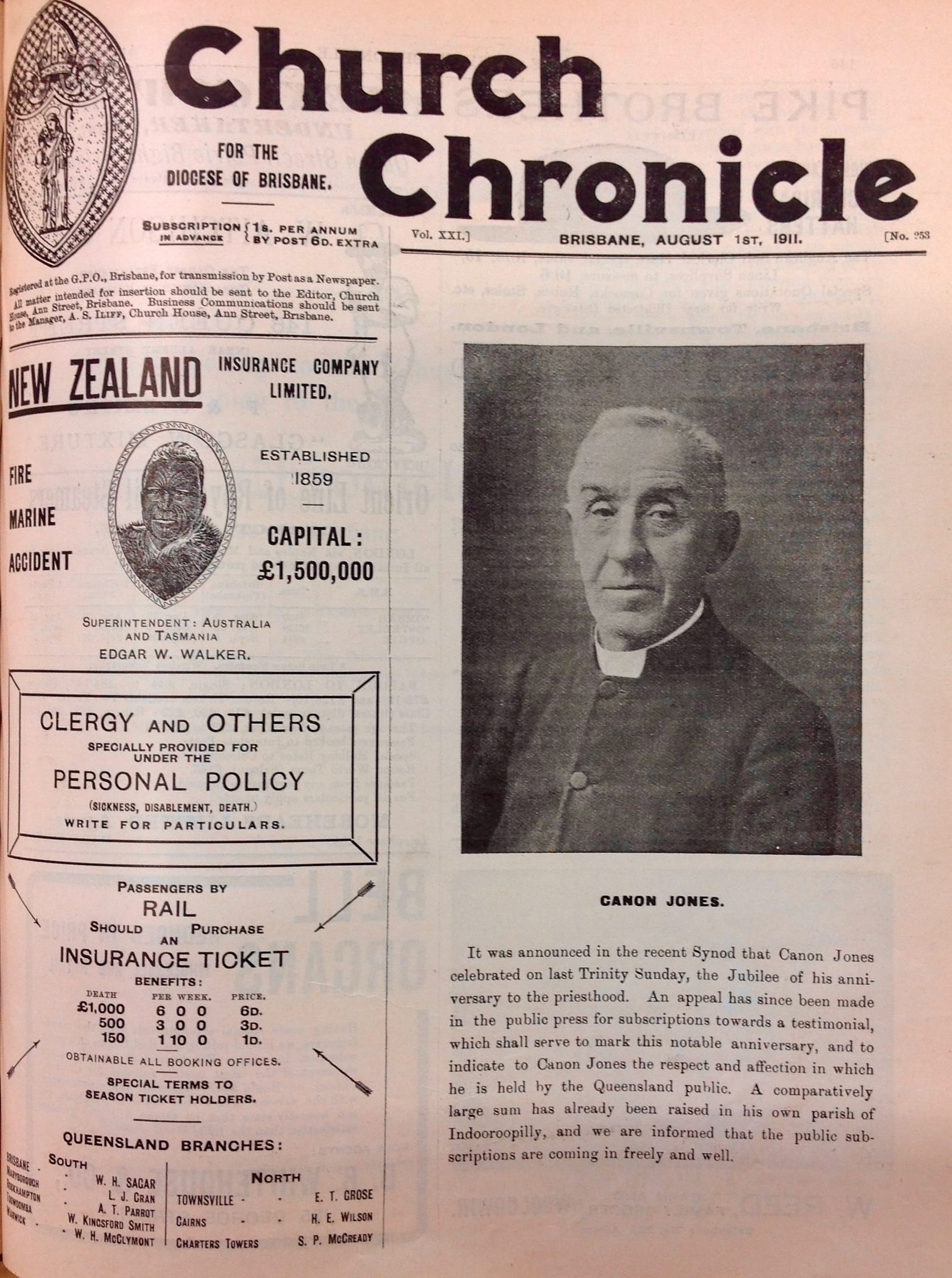
THE LATE CANON
THOMAS JONES.
A REMINISCENT TRIBUTE.
(By D.J.G., with the A.I.F. abroad.)*
MY first acquaintance with the Venerable Thomas Jones was made in the year 1887, when he was Archdeacon of the Darling Downs and Rector of St James’s, Toowoomba.
It was not long before he invited me, as a layman, to help him occasionally in taking services in parts of the huge area under his jurisdiction, some of which had practically little or no religious ministrations except such as he provided.
It was not long after that beginning before he appealed to me as a churchman to entirely abandon secular work and the prospects of a career which were in front of me in order to devote myself entirely to the work of the Church.
His persuasiveness did not take the form of minimising the cost, rather the reverse, but at any rate was so successful that if I have been permitted to do any good in the thirty-one years, which since have elapsed, the credit of it must go to him as the one who give me the opportunity.
Placing me successively in different parts of the archdeaconry, he never left me without sympathetic counsel and advice so essential to a young beginner, nor without any help which he could give, so much so, that looking back upon that period I can say, so wisely did he handle me that never once did I fail to carry out to the utmost his wishes or to do anything which he would not have wished done.
Once a week he brought me into his home and family life, though his time was precious from the demands made upon it by all and sundry – it seemed as if his doorbell never stopped ringing from morning to night, while to walk down the street with him meant that he was stopped every few yards yet he always could find time to talk sympathetically and helpfully to me.
I was welcomed into the family by Mrs Jones [Francis Sophia Jones, neé Jones] also, who fully shared his aspirations and without whom the work he did would have been impossible.
Sometimes he would go round the districts with me to administer Holy Baptism – I not being yet ordained – or to look into some problem arising; how well I remember the affection and respect with which he was received in every little home in the bush.
Perhaps the affection and respect is best expressed by a remark made to me by a rough bushman whom I overtook as I rode one day: “If more of you parsons was like Tommy Jones we would be better Christians.”
That was how rich and poor alike thought of him.
Much credit is given to-day to the establishment of Bush Brotherhoods, but I believe the real originator of them was Archdeacon Jones, not that he laid himself out to be the founder of a new order, he just dealt with the immediate need in his own practical way.
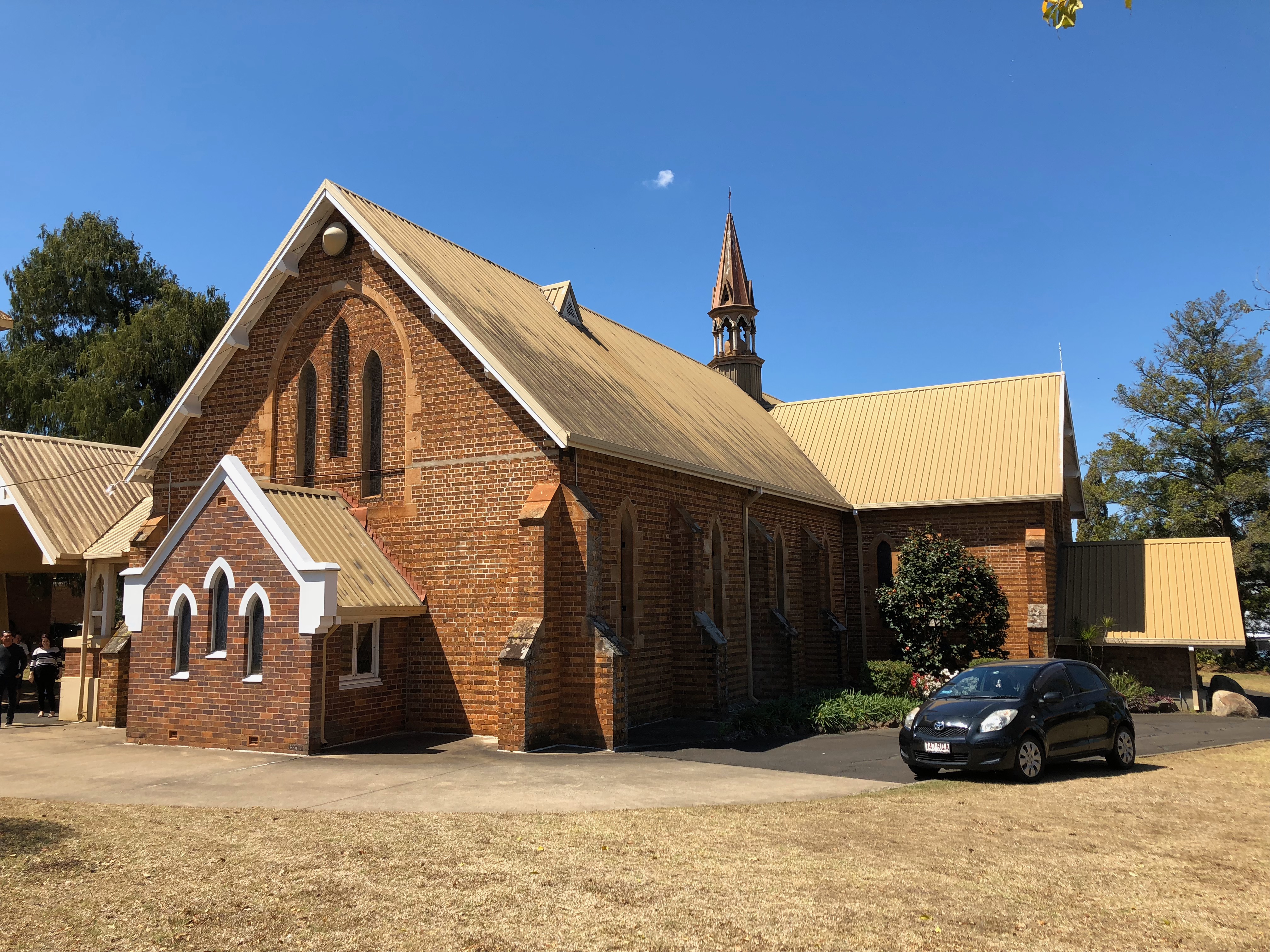
The Church of St. James’, Toowoomba, which he loved so well, and the beauty of which owes so much to his personal generosity as well as to gifts obtained by him, he used as a centre to gather around him a body of men, priest, deacon, young laymen, like myself, and sent us out, so ruling us that we were ready to do, and devoted to, whatever he wished; there is no doubt in my mind that thus he solved the problem of church work in the bush.
I happened to be in close spiritual relations with Bishop Dawes [Nathaniel Dawes], then Archdeacon of Brisbane, and I have no doubt that when he became Bishop of Rockhampton his knowledge of Archdeacon Jones’s work gave him the model on which to found the first Bush Brotherhood in Australia.
One recollection I have of those days was how full St James’s Church was at the Sunday morning service.
It was nothing infrequent to find the church full, half an hour before service; but this was no uncommon experience in the life of Archdeacon Jones.
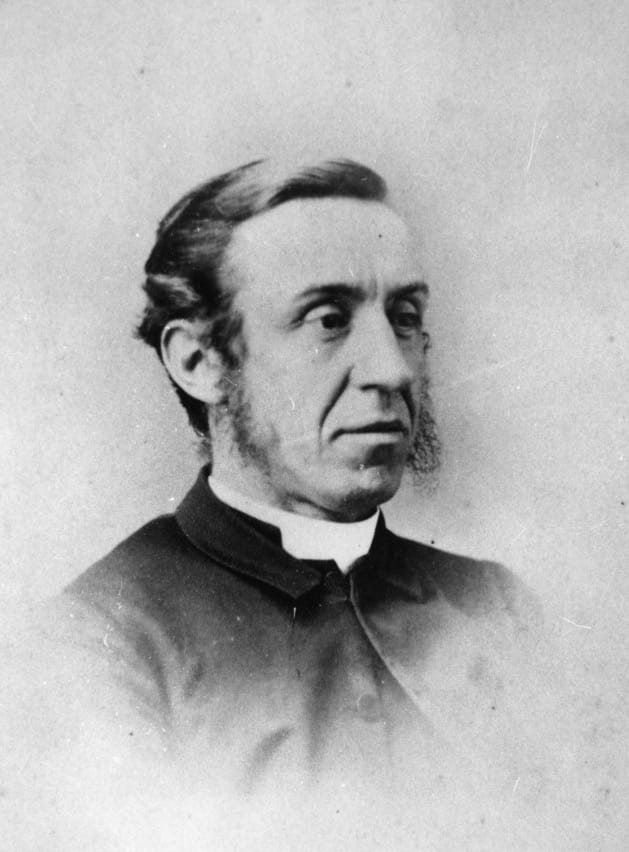
In his earlier days, when he was in charge of All Saints’, Brisbane, he went to his Bishop as a young priest seeking advice as to how to deal with the congregation which, before the service, had nearly as many people outside as those who filled it within.
Of his generosity to the Church not much in known, and much is forgotten, but I know how in those days he would travel around to some rising township, and with unerring judgment select a suitable site for a future church.
He would purchase it and hold it at his own risk. If months or years afterwards the local committee would choose to buy it he would let them have it at the price he paid for it without interest; if they did not choose to take it well and good, that was his personal risk, and sometimes loss.
In his generosity to individuals he put into literal practice the principle “Give to him that asketh thee and from him that would borrow of thee turn not thou away.”†
There are not a few businessmen in Queensland who owe their start in life to his financial assistance, and there are many individuals who benefited by his charity to such an extent that at a later period in his life his wealth almost disappeared.
Always regardless of himself, even of his personal appearance, giving money to others while remaining shabby himself, eating simply, without any personal luxury, indeed denying himself comfort, he gave to others that which he might have spent on himself.
One apparent luxury he allowed himself, an occasional trip to other lands, but these were with a purpose, to enlarge his knowledge and to come back with fresh vigour to his work, because, as he said, while in Queensland he could never get away from his work, and he feared he might get stale.
There is one sad episode in his ecclesiastical life – and very shame that such a thing could happen prevents me relating it at length – all the splendid work which he did came suddenly to an end owing to a disagreement on a question of principle with the Bishop of the day.
Archdeacon Jones, with that desire to be charitable which dominated him in everything, thought it better to leave Queensland for a while in the hope that resumed relations would be happier.
Alas, the charity was all on his side, for his living was declared vacant, churches which he had kept open were closed, and remained closed for years, and his band of workers was scattered.
Notwithstanding all this, his charity never failed, for he returned to his old Diocese, willing to take any position, however small or humble; but for two years was denied the opportunity of ministering to the people who loved him so well.
What happened at the end of the two years is known only to the dead, but the Premier of the day paid a visit to the Bishop, with the result that the reproach which the church people considered was cast upon them was removed by the reinstatement of “Mr.” Jones – as he had now become – to his priestly work.
An elderly soldier said to me on learning this week the news that this old Archdeacon and passed away, “Well, we Queensland people never forgave the Bishop for his treatment of the Archdeacon.”
When years afterwards he was again made a dignitary of the Church, it was stated in the Press that more honour was conferred on the Church by Archdeacon Jones’ acceptance than on him by its bestowal.
Retreat and quiet days are not only an accepted, but a regular thing for clergy and laity.
Unless I am mistaken almost the first clerical retreat in Queensland was held by Archdeacon Jones.
Regularly he brought in the clergy and workers of his Archdeaconry to St. James’ Church, where he would get some priest to give addresses during the day, following that up with a conference.
He put himself in the background, never giving the address, and yet he was the spirit of the whole thing; his hospitality was lavish, as was also his generosity to the clergy and workers, for he often paid their expenses that they might be able to come.
In Synod he never hesitated to speak out his views frankly and fearlessly, and yet always with Christian courtesy, with the result that when the matter came to a vote it would be asked: “How is Tommy going to vote?” and in most cases that decided the question, even although, as I myself heard on one occasion, the president himself advised the Synod to vote in the opposite direction.
How the young people loved him, and came to him with all their troubles and joys, and as they grew up brought their courtships to him and then their marriages.
No one but he was to baptise their children, and many and many a one has said, “When I die, get Tommy Jones to bury me.”
But perhaps the best and most, wonderful feature of his life was the extraordinary way he strengthened the faith of individuals.
Perhaps it was his humility, never expressed by words – he was too genuinely humble; perhaps it was even more the way in which be placed himself on a level with his auditor, saying, “I had exactly the same difficulty as you,” and then with gentle persuasion would show why the doubt had ceased or did not oppress him.
Many people, not church men, have spoken of him to me as the “grand old man of Queensland”.
His name was a household word; he belonged to the community, and the community regarded him as a man of whom they were most proud.
A new generation has sprung up which knew him not in his strength and vigour.
Sometimes even they would mock at what in his old age appeared to them as comical, little realising that to us of a former generation they were belittling themselves by making fun of those qualities and even mannerisms which had made him loved more than any other individual in Queensland.
Today the Church of England in Queensland is vigorous and strong as compared with other places, much of that vigour and strength would not have been possible but for the Venerable Thomas Jones.
Whom shall we ever see again go up to the holy altar with such reverence?
Whom shall we ever hear again rend the service of the Church with such tender reverence as he?
In that communion of saints in which he believed so keenly, may he find a rich reward, and a welcome from the many who will tell him that they owe the inspiration of their life on earth and – under God – the salvation of their souls in heaven to his teaching, influence, and example.
- † From The Book of Matthew, Chapter 5, verse 42. KJV Bible.
- § Ecclesiasticus 50:12.
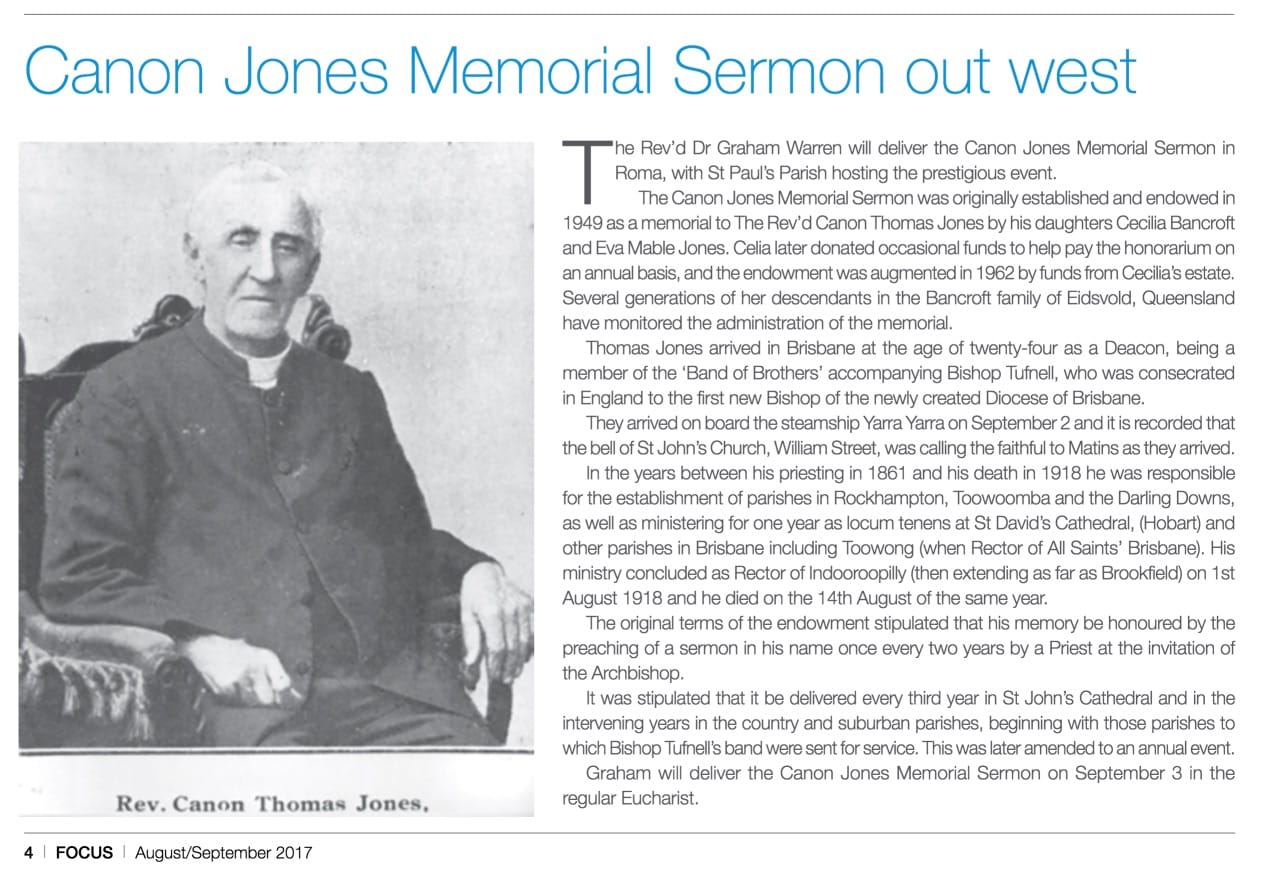
DEATH OF CANON JONES.
A NOTABLE CHURCHMAN.
A VERY wide circle of friends will learn with deep regret of the death of Canon Thomas Jones who had retired from the incumbency of Indooroopilly at the end of July.
About a fortnight ago he contracted a severe cold which developed into pneumonia and yesterday afternoon [14 August 1918] he passed away at his residence at he passed away at his late residence at Indooroopilly.
The deceased gentleman, who had just entered his 83rd year, leaves two sons and four daughters. Two of the latter are married — Mrs Thomas Bancroft, of Eidsvold, and Mrs William Mansfield, of Sydney.
Canon Jones’s active association with the Church of England went back almost to the very dawn of Church history in Queensland.
It is true there were roseate hues before the arrival of Bishop Tufnell and his young curates; it is true that the district of Moreton Bay, before the days of Separation, was under the direction of Dr. Tyrell, as Bishop of Newcastle, and that the Rev. John Gregor, M.A., came here in 1842, took up residence at the old Moravian Missionary station, and endured much toil and much privation with very little success, it is true that the Rev. B. Glennie, afterwards Archdeacon Glennie, the Rev. J. Bodenham, the Rev. John Moseley and the Rev. R. Creyke, all came to Moreton Bay in the fifties.
But the fact remains that the Church of England in Queensland was thoroughly disorganised until the arrival here of the Right Rev. Edward Wyndham Tufnell, formerly Prebendary of Salisbury — one of England's most magnificent cathedrals.
Bishop Tufnell, brilliant Oxford scholar, arrived here in 1860.
He was the symbol of hope. Prior to accepting that office, he was vicar of St Peter’s in Marlborough and it was he that induced young Thomas Jones to cast his future life in Holy Orders.
In 1859, Mr. Jones was ordained as Deacon in Salisbury Cathedral by Bishop Hamilton, and in the following year was ordained in the priesthood of the Church by Bishop Tufnell.
Six young men from the Diocese of Salisbury decided to come to Queensland with Bishop Tufnell. They were the Revs. Thomas Jones, John Sutton, Edward Moberly, John Tomlinson, Vincent Lansome and Mr McKenzie.
The Rev. Thomas Jones was appointed curate to the Bishop, the pro-Cathedral of St John’s being on a site in Queen’s Gardens, close to where the Executive Building now stands.
In the intervening 58 years, Mr Jones has been a loyal and valued assistant to Bishop Tufnell, Bishop Ogden Hale, Bishop Thornhill Webber and the present Archbishop (Dr Donaldson).
Canon Jones was born at Preston on July 30, 1838, and was educated at Preston Grammar School.
He was an assistant master in Marlborough Grammar School when Bishop Tufnell, then vicar of St Peter's in that city, induced him to study for ordination.
He intended being a passenger to Australia on the Royal Charter.
Just prior to its leaving England, that vessel was wrecked on the coast of Wales and Mr. Jones came by the sailing ship, Vimeru.
He arrived in Queensland in 1860, and used to recount that the old YarraYarra, on which he was a passenger, came on the river on a Sunday morning as the old bell of St Paul’s was ringing for service.
If the Royal Charter had completed its voyage, Mr. Jones would have received £100 a year from the Crown for the remainder of his life, but just before his arrival, the State endowment was discontinued.
Two years were spent in Brisbane at the pro-Cathedral and then Mr Jones went to Rockhampton to organise the Church in the Central District.
In the year 1865, Mr. Jones returned to Brisbane as vicar of All Saints’ Church and he remained there for 12 years — years of arduous work not broken by even one holiday period.
In 1877, he went to England for a trip and on his return he was attached for two years to the Cathedral at Hobart.
He preferred Queensland, however, and accepted the charge of the church in Toowoomba, remaining there for about 10 years.
He visited England in 1889, and on returning to Queensland in 1891 assisted in the ministrations of All Saints’ Church, Brisbane, until the beginning of 1894, when he took charge of the Church of England at Indooroopilly.
Thus the life of Canon Jones ran through almost the whole of the history of the Church of England in Queensland.
He has been a “gran’ old man” — not so much because of any intellectual superiority nor because of any outstanding administrative ability, but because of a personal magnetism.
He was grand, too, because in every sense he was a noble Christian.
If ever Queensland had a clergyman whose heart was filled with the love of his fellow men — and it has had many — Canon Jones must be numbered as that man.
That was his vocation, that was his life. Into it he poured his generous emotion, his boundless enthusiasm and his genial good nature.
Some years ago, he was presented by his many friends in Queensland with a beautiful illuminated address and a cheque for a generous sum in recognition of the completion of his jubilee as a minister of religion in Queensland.
The words of the address may well be quoted:
“And there are still greater things done by you. It is generally recognised to those acquainted with the history of Queensland that the sound churchmanship of, and the absence of party feeling from, the Church of England of England in this State are largely due to your personal influence and qualities.
“Indeed, it may be added that the absence of religious bitterness in the State generally is similarly recognised as greatly due to the good works of your earlier days.
“Your generosity to the Church and to individuals has made your name a home word throughout the State.
“Above all also is that which can never be told until the Books are opened on the Last Day of the numerous souls you have helped and encouraged in the path of duty and strengthened in the faith of Jesus Christ: no less by wise, kindly counsel than by the consistent example you have shown as an English gentleman, and a Christian priest, throughout the half century of your life in our land.”
Queensland has lost a great and a good man.
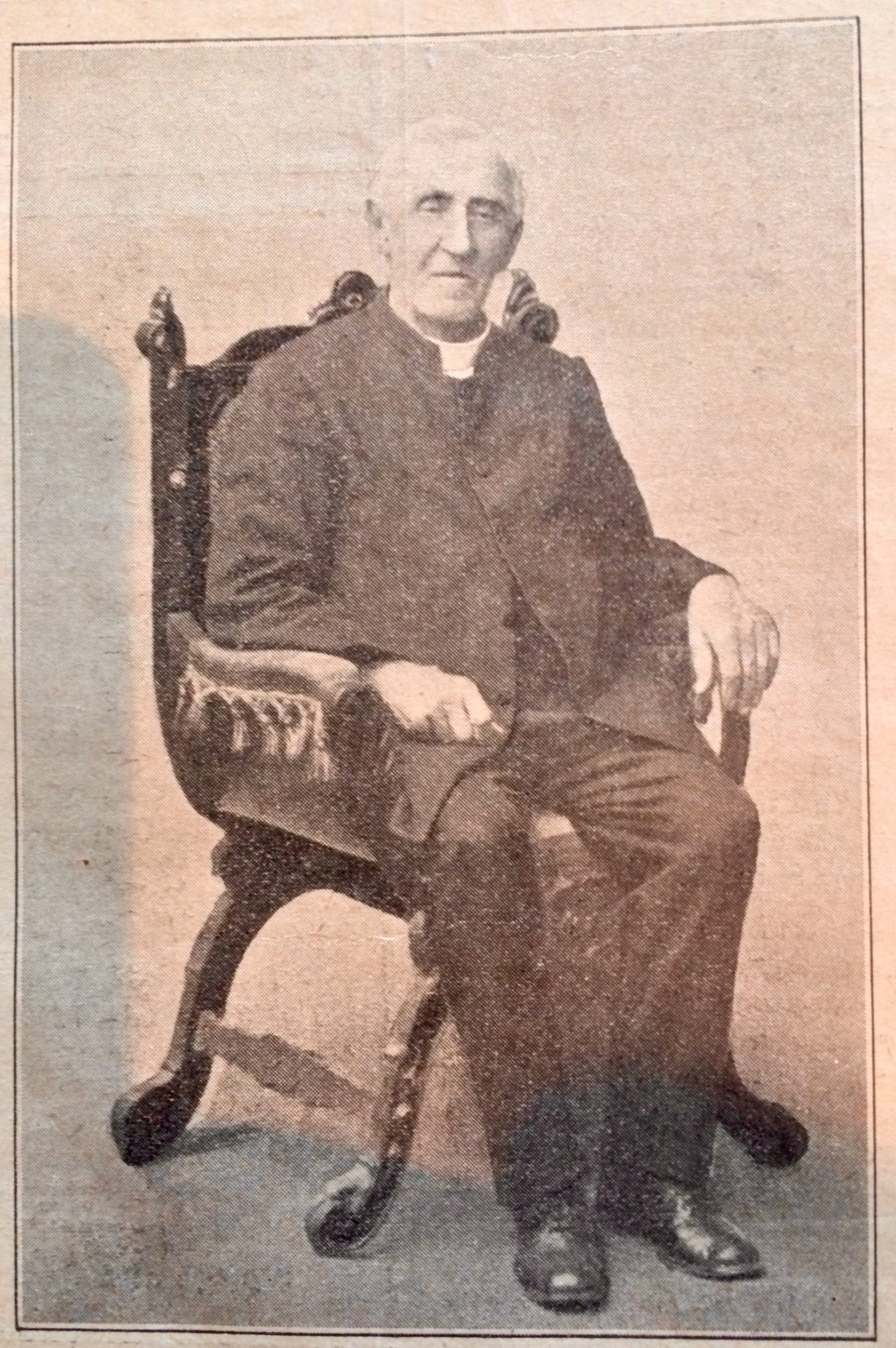
TRIBUTE BY THE ARCHBISHOP
AT the meeting of the Church of England Men’s Society of Queensland last night [14 August 1918], before proceeding with his presidential address, His Grace, Archbishop Donaldson [St Clair George Alfred Donaldson], alluded to the fact of Canon Jones’s death, and said it was not a cause for sorrow.
Canon Jones, he said, had died at a ripe old age, full of years and honour and rich in the affection of all who knew him.
Many of the churchmen present had not known Canon Jones in the days of his greatest activities and therefore did not realise the tremendous value of his pioneer services to the Church in Queensland.
It had been a great pleasure to him (the Archbishop) to see the late Canon on Saturday.
They had prayer together, he gave the Canon his blessing and the Canon spoke of the great comfort the communion of saints had been to him in his illness
The council passed the following resolution: “That this council of the Church of England Men’s Society in Oueensland, desires to record its thankfulness to Almighty God for the life and work of Canon Jones and its deep sense of his great services to the Church in Queensland.”
A service will be held at the Cathedral at 3:30pm today, after which the funeral cortege will leave for the Toowong Cemetery.
A request is made that no flowers shall be forwarded.
— from page 4 of The Brisbane Courier of 15 August 1918.